
Dr. Rhonda Moffit

If you ever find yourself in the Tennessee Smokies with your mind moving too fast for your own good, Cades Cove is the kind of place that politely takes your wrist, looks you in the eye, and says, “No, really—slow down.”
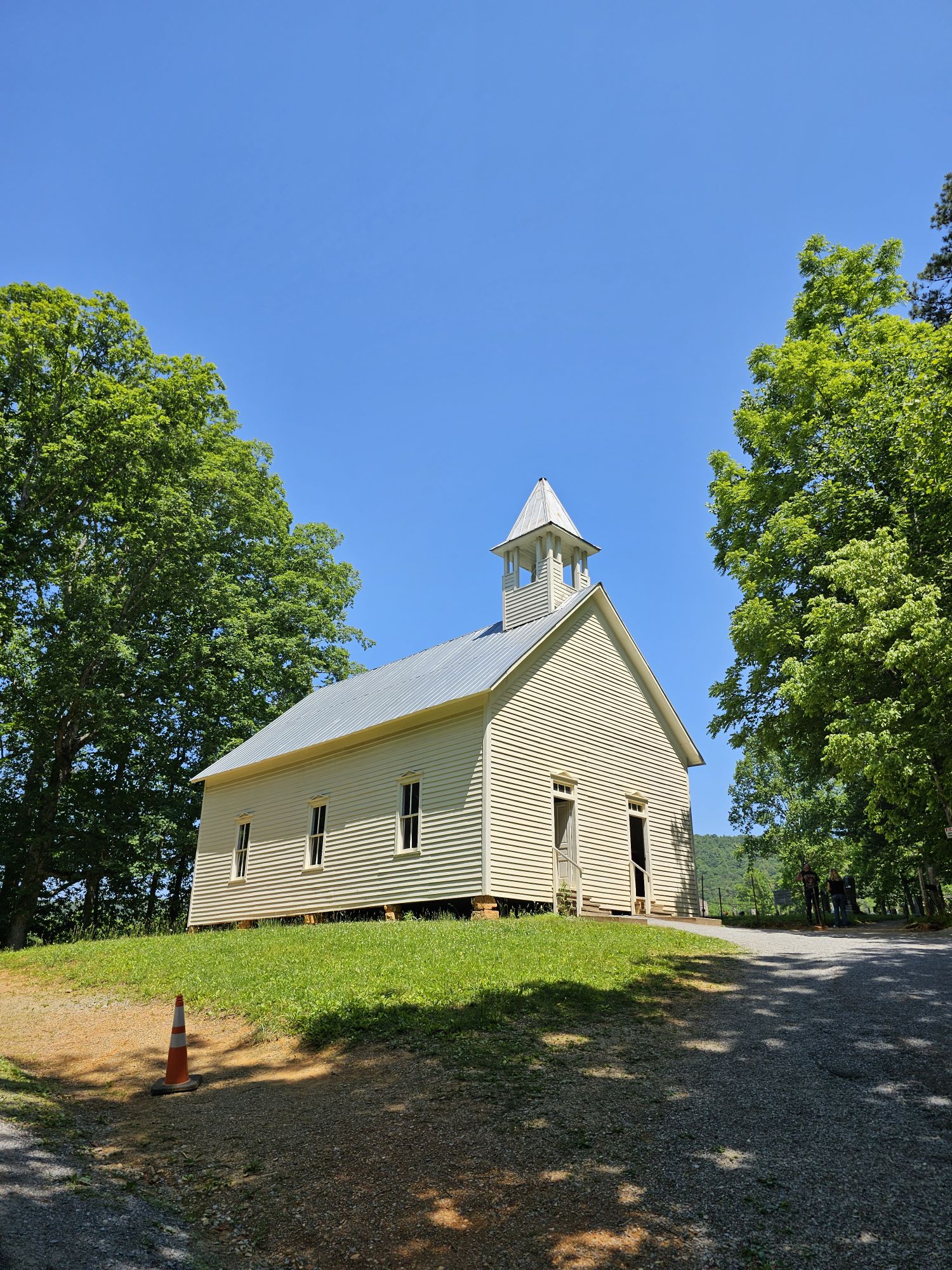
It’s tucked inside Great Smoky Mountains National Park, but it feels less like a destination and more like an interval in time. The road loops through open valley, old homesteads, weathered churches, split-rail fences, and meadows that seem to exhale instead of exist. Every bend invites you to notice something small: a horse grazing in the distance, fog dragging itself off the hills, a cabin leaning into its own history, or the faint sense that the land remembers more than it says.
A Valley With a Long Memory
Before Cades Cove became a scenic drive, it was a home.
For centuries, Indigenous peoples used the area long before Euro-American settlement. The valley’s shape, fertile land, and protection from harsher mountain weather made it a natural gathering place. Later, in the early 1800s, settlers arrived and built a community that was both hardy and deeply tied to the land. They cleared fields, raised barns, attended church, buried loved ones, and made a life in a place that asked for work and offered beauty in return.

There’s something quietly humbling about standing near a preserved cabin or church and imagining the rhythm of daily life here: chopping wood before sunrise, tending crops through unforgiving seasons, hearing the same cicadas that hum today, and watching the mountains hold the sky like they were built for it.
Cades Cove was never merely picturesque. It was practical, rugged, and human. That’s part of what makes it moving. The beauty isn’t polished. It is lived-in.
The Entertaining Part: History With a Side of Sass
Cades Cove has a way of making history feel less like a textbook and more like a good story told on a porch after supper.
There were family rivalries, church splits, frontier persistence, and the usual assortment of people trying to make their mark while the mountains watched with polite indifference. Some built elegant homes by pioneer standards. Some stayed in simple cabins. Some farmed, some preached, some argued, and some probably just wanted a quiet life and got a whole chapter of American history instead.
The valley also has its share of ghost-story energy—not necessarily in the spooky, haunted-house sense, but in the “this place has seen things” sense. Old cemeteries sit beneath the trees, church buildings stand like they’re still waiting for a hymn to begin, and the hills around the cove seem to preserve every footstep in the most dignified way possible.
And then there are the deer. The turkeys. The occasional black bear traffic jam. Nature has not forgotten how to steal the scene.

Why Cades Cove Is So Good for Slowing Down
Cades Cove is amazing because it does something rare: it rewards your attention.
Modern life trains us to move quickly, consume quickly, and move on before anything settles. Cades Cove refuses that pace. The loop road is slow by design. You are meant to linger. You are meant to look twice. You are meant to stop for the church, the cabin, the field, the mountain, the shadow, the silence.
It’s a place that makes room for reflection without demanding it.
You might arrive thinking you’re there for scenery, but what you really get is perspective. The open valley and surrounding ridges create a kind of natural pause button. The further you drive, the more your thoughts start to stretch out. Concerns lose some of their sharp edges. The air feels wider than your calendar. Even the light seems to behave differently there—softer, slower, more willing to stay a while.
Cades Cove invites a rare emotional posture: not productivity, but presence.
The Deep Pleasure of Standing Still
There’s a deep satisfaction in a place that asks nothing except that you notice it.
The old structures remind you that life used to be harder, quieter, and more intimately connected to weather, seasons, and land. The mountains remind you that your troubles are real, but not always as enormous as they feel. The wildlife reminds you that the world keeps going whether or not you check your phone. And the long, open views remind you that breathing deeply is sometimes a form of wisdom.
Cades Cove is not dramatic in a flashy way. It doesn’t need to be. Its power is steadier than that. It’s in the way history and landscape sit side by side. It’s in the feeling that, for a little while, you can step outside the machinery of urgency and simply exist.

Final Thoughts
Cades Cove is one of those places that meets you where you are and then gently asks you to become a little more present than you were before. It is beautiful, yes—but its real gift is deeper than beauty. It offers a kind of quiet honesty. It reminds you that lives were lived here, that time leaves traces, and that slowing down is not a luxury so much as a way of paying attention to what matters.
If you go, don’t rush it.
Let the valley unfold.
Let the history speak.
Let the mountains keep their watch.
And if you’re lucky, let yourself sink in enough to remember what it feels like to be part of a place instead of merely passing through it.



Leave a Reply